
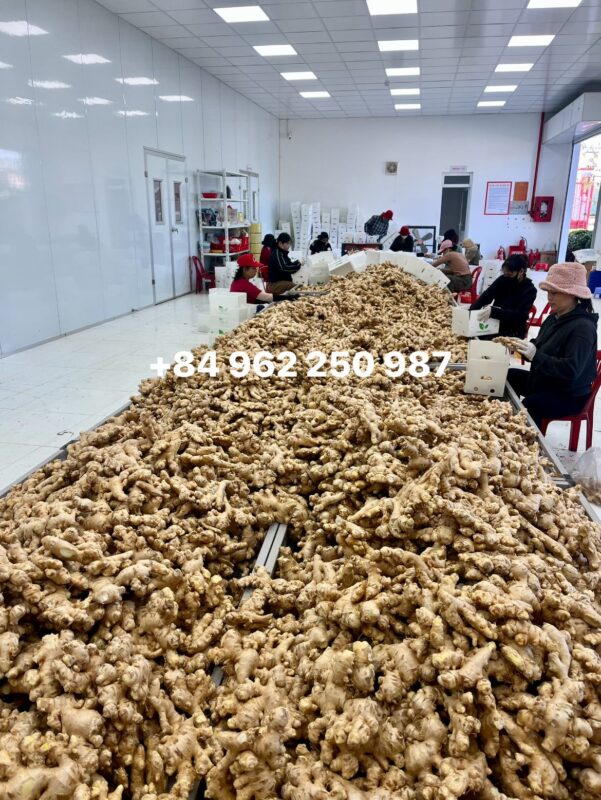
In recent years, Central Highlands ginger for export has gradually established its position as a high-value agricultural product of Vietnam, not only thanks to stable output but also due to its quality being increasingly recognized by international markets. From a traditional crop, Central Highlands ginger is now being reorganized into concentrated raw material zones, better meeting the stringent requirements of modern export standards.
The development of Central Highlands ginger for export reflects a broader transformation in agriculture—from fragmented production to controlled value chains, and from raw exports to higher value creation and strengthened origin credibility.
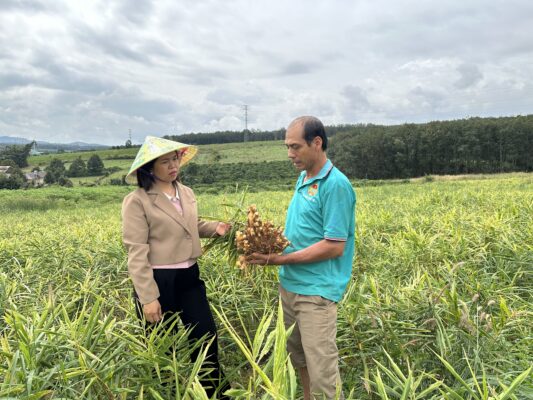
Natural Conditions That Define the Quality of Central Highlands Ginger
The Central Highlands feature mineral-rich basalt soil, a mild highland climate, and distinct day–night temperature variations. These conditions are ideal for ginger cultivation, resulting in large, firm rhizomes with yellow flesh, high essential oil content, and a distinctive pungent aroma.
These natural advantages give Central Highlands ginger for export a strong competitive edge compared to many other growing regions in Asia. The ginger is highly uniform in size, has good storage stability, and is suitable for both fresh export and industrial processing.
The Role of Ginger in the Global Supply Chain
Globally, ginger is widely used in:
-
Food and spice industries
-
Natural beverages and herbal teas
-
Herbal processing and functional ingredient sectors
Demand for imported ginger remains high in markets such as the United States, Australia, South Korea, and the Middle East, particularly for suppliers that offer stable quality, food safety compliance, and clear traceability. In this context, Central Highlands ginger for export is considered a promising supply source, capable of meeting both quality and volume requirements.
Central Highlands Ginger for Export and Its Ability to Meet High-Standard Markets
One key factor driving growing interest in Central Highlands ginger for export is its ability to comply with strict market standards. With well-managed raw material zones and professionally invested post-harvest processes, Central Highlands ginger can effectively compete with traditional suppliers in the region.
The current trend for Central Highlands ginger for export focuses on developing concentrated growing areas that help to:
-
Stabilize seasonal output
-
Ensure uniform ginger quality
-
Fulfill large-scale and long-term orders
Organizing production at the regional level not only enhances the commercial value of ginger but also enables the adoption of sustainable farming practices, reducing risks for both farmers and enterprises.]
From Fresh Ginger to Value-Added Processing
In addition to fresh ginger exports, deep processing is opening new pathways for Central Highlands ginger for export. Ginger is increasingly used as an input for products such as ginger extracts, herbal syrups, and ginger tea, helping to:
-
Increase value per unit of raw material
-
Reduce reliance on raw ginger markets
-
Extend product life cycles
This approach elevates Central Highlands ginger within the global value chain, rather than limiting it to the role of a raw commodity.
Central Highlands Ginger and Sustainable Agricultural Development
Beyond its economic value, Central Highlands ginger for export is closely linked to sustainable agriculture strategies. Transitioning from low-value crops to ginger cultivation helps to:
-
Increase farmers’ incomes
-
Reduce pressure on land and forest resources
-
Create stable livelihoods in mountainous areas
These factors form a critical foundation for the long-term development of Central Highlands ginger, ensuring sustainable growth rather than short-term expansion.
DATO – Developer and Exporter of Central Highlands Ginger
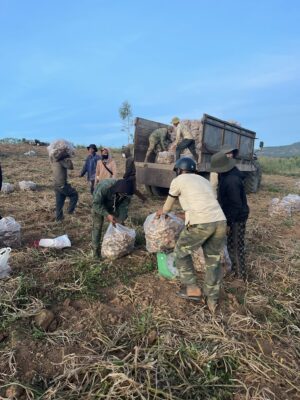
Within this value chain, DATO is a key enterprise directly developing ginger raw material zones in the Central Highlands. DATO partners with more than 500 farming households to cultivate over 300 hectares of ginger that meet export standards.
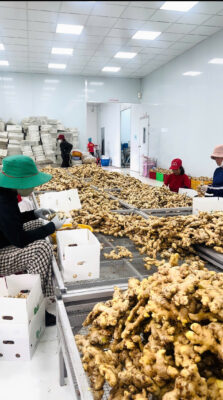
DATO has invested in on-site preliminary processing, cold storage, and packaging systems at the growing areas, ensuring ginger quality is preserved throughout the export process. Currently, Central Highlands ginger for export by DATO has been supplied to demanding markets such as the United States, Australia, South Korea, and the Middle East.
With a value-chain approach and a strong commitment to sustainability, DATO is contributing to positioning Central Highlands ginger for export as a high-value and stable agricultural product of Vietnam.
Contact for Central Highlands Ginger Export
If you are seeking Central Highlands ginger for export and looking for a stable, high-quality supply that meets the standards of demanding international markets, please contact DATO. With well-organized raw material zones, standardized post-harvest handling and storage systems, and proven export experience, DATO is ready to connect and supply Central Highlands ginger for export tailored to the needs of both domestic and international partners.

